Peer-reviewed journal articles:
‘Subordinate monopolization and the origins of major power conflict’ (accepted at Security Studies)
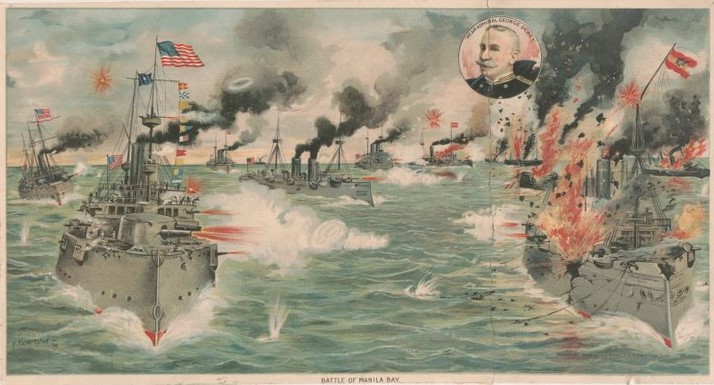
An overlooked pathway through which rising powers may be drawn into conflict with major powers is competition over small states and territories. When a rising power seeks to monopolize a subordinate, preventing other major powers from pursuing their interests in its territory, this challenges the material interests of other major powers and violates norms of open subordinate governance. To address this violation, threats and force may be employed. Moreover, the monopolizer is perceived as having revisionist preferences for international order, meaning future interactions are more discordant, making conflict more likely. This argument is evaluated through quantitative examination of rising power disputes between 1816 and 2010 and comparative case study analysis of Russo-Japanese and Spanish-American Wars. Contestation of the norms of subordinate governance play an important role in shaping the probability of major power conflict, and provide insight into the behavior of the major powers in the contemporary international order.
How have understandings of fundamental norms of international society changed over time? How does this relate to the decline of interstate violence since 1945? Previous explanations have focused on regime type, domestic institutions, economic interdependence, relative power, and nuclear weapons, I argue that a crucial and underexplored part of the puzzle is the change in understanding of sovereignty over the same period. In this article, I propose a novel means of examining change in these norms between 1970 and 2014 by analyzing the content of UN Security Council resolutions. This analysis is then utilized in quantitative analysis of the level of violence dispute participants resorted to in all Militarized Interstate Disputes in the period. I find that as liberal understandings of fundamental norms have increased, that the average level of violence used has decreased. This points to a crucial missing component in the existing literature: that institutions can only constrain when political actors share the right norms.
Works in progress
Book manuscript: ‘Rising power disputes, subordinate monopolization, and major interstate war’
This book length treatment of norms of subordinate governance examines the consistency of these norms across time and space, and their content. Empirically, it contributes large-N statistical anayiss over the 1816-2010 period and case studies drawn from the nineteenth century, interwar period, and Cold War. Finally, it consider the implications of these norms for the contemporary interational order, with a particular focus on the rises of China and India.
‘The location of rising power disputes: social position and regional expansion’
I argue that the social position of rising powers has an influential effect upon the location of disputes rising powers enter into. In short, those rising from within the ranks of the great powers tend to have extra-regional disputes, whilst those rising from below the great powers concentrate in their home region.
‘Second rank powers and international order’
How do second rank states impact the international order? What are their strategies? This project seeks to understand the place of states on the fringes of the major powers in international relations, and their impact on the international order. It seeks, therefore, to understand states that are rising and declining, as well as those that endure at a level just outside of the major powers.
‘War, victory, and state formation’ (with Luis L. Schenoni, UCL)
This project examines how victory in interstate wars impacts state capacity over the longer term from 1816 onwards.
‘The impact of UN peacekeeping norms on interstate conflict’
I utilize content analysis of UNSC and UNGA resolutions to understand the evolution of peacekeeping norms, and applies this to the success of peacekeeping missions.
Book reviews
Blog posts
‘Shinzo Abe or Abe Shinzo: from western order to international order?’ (OxPol blog, 17th April 2020)
‘London and the rest: regional transport disparities in the UK’ (OxPol blog, 13th May 2019)
‘Is power-sharing a solution in the Israeli-Palestinian conflict?’ (OxPol blog, 3rd April 2019)
‘NATO, the Russian threat and defence spending’ (OxPol blog, 26th July 2018)
Popular Graphic Arts, Public domain, via Wikimedia Commons
 Patrick Gill-Tiney